
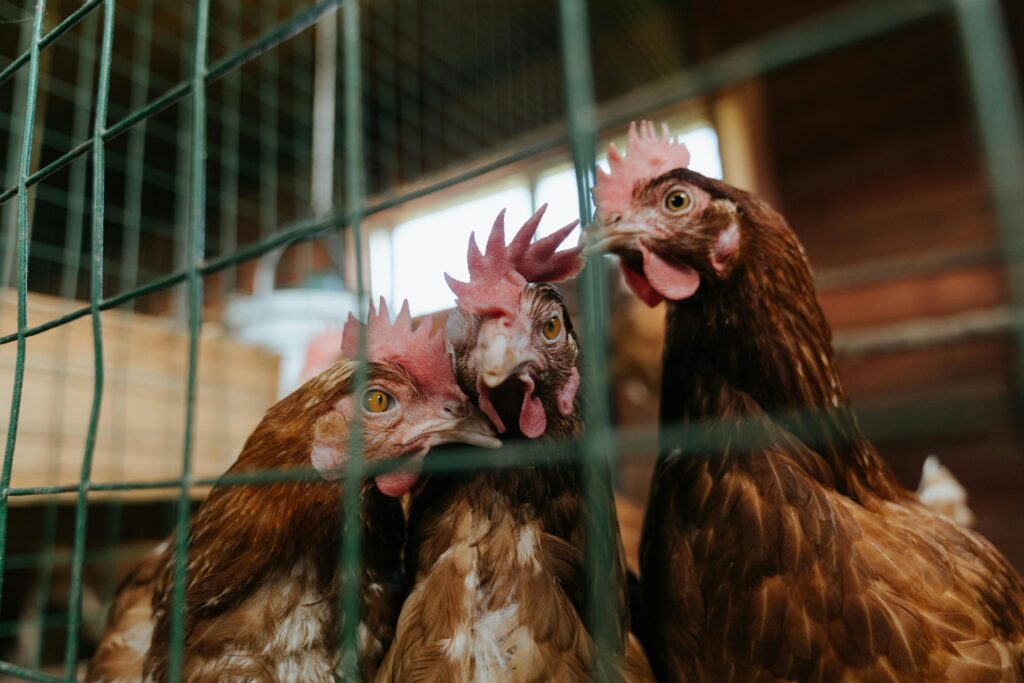
As global food systems evolve, Indonesia finds itself at an important turning point. Around the world, major food companies are shifting away from conventional battery cage systems in favor of cage-free egg production—driven by growing concern for animal welfare, sustainability, and food safety. But in Indonesia, the pace of change remains slow, and greater momentum is urgently needed.
The Reality of Egg Production in Indonesia
The majority of laying hens in Indonesia are still confined in battery cages—small wire enclosures that severely restrict movement and prevent birds from expressing natural behaviors like nesting, perching, or dust bathing. These systems pose serious animal welfare concerns and are increasingly out of step with international best practices.
Scientific studies and global guidelines, including those from the World Organisation for Animal Health (WOAH), recognize that cage systems compromise bird welfare. As awareness grows, cage-free systems are becoming the new baseline standard in many regions of the world.
A Growing Global Standard—But Gaps Remain
Over 2,500 companies globally have pledged to go cage-free, including multinational brands with significant operations in Indonesia. These commitments, many with 2025 deadlines, reflect a broad consensus that cage-free is no longer a niche concern—it is a core part of responsible sourcing.
However, implementation in Indonesia has often lagged behind. While companies have made global promises, many have not provided clear timelines, public updates, or concrete action plans for their Indonesian supply chains.
This lack of regional transparency not only delays progress but puts local producers at risk of being left behind as global standards evolve.
Supporting the Transition
The shift to cage-free requires thoughtful planning, particularly in a market like Indonesia where infrastructure and technical knowledge are still developing. Egg producers need support—through training, investment, and market incentives—to successfully transition away from cages.
That’s where collaboration becomes essential. Corporate buyers, civil society groups, technical experts, and governments all have a role to play. Innovative mechanisms like cage-free impact credits can also help bridge the gap, allowing companies to financially support cage-free farms even as supply chains are being developed.
At INCAF, we work with local partners to promote practical solutions that advance animal welfare while supporting industry development. Our goal is to ensure that Indonesia is not left behind as global animal welfare expectations continue to rise.
The Path Forward
To ensure meaningful progress, we urge:
Transparency from companies: Brands with global cage-free pledges should publish local implementation timelines for Indonesia and report on progress.
Support for farmers: Producers need access to training, resources, and financial tools to successfully adopt cage-free systems.
Collaboration and accountability: Multi-stakeholder partnerships are key to ensuring that cage-free is not just a commitment—but a reality on the ground.
Conclusion
Indonesia has the opportunity to lead the region in responsible egg production—but action must start now. With coordinated effort and sustained investment, a future where laying hens are no longer confined to cages is within reach. For companies, farmers, and consumers alike, the message is clear: the future of eggs is cage-free—and Indonesia must be part of that future.